

Engineering for Marine Productivity
Artificial reefs represent a long-term social and economic investment aimed at strengthening marine productivity and supporting local fisheries. Off the coast of Saint-Louis, STAPEM Group was mandated to deliver a large-scale artificial reef program designed to enhance natural spawning areas and contribute to the sustainability of coastal fishing zones.
From engineering and fabrication to offshore installation and survey, this project mobilized the full range of STAPEM Group expertise, combining engineering, marine operations, subsea execution and survey into a single, integrated delivery.
ARTIFICIAL REEFS
SAINT-LOUIS
Engineering durable habitats to enhance natural spawning areas.
Building a Village
Under the Sea
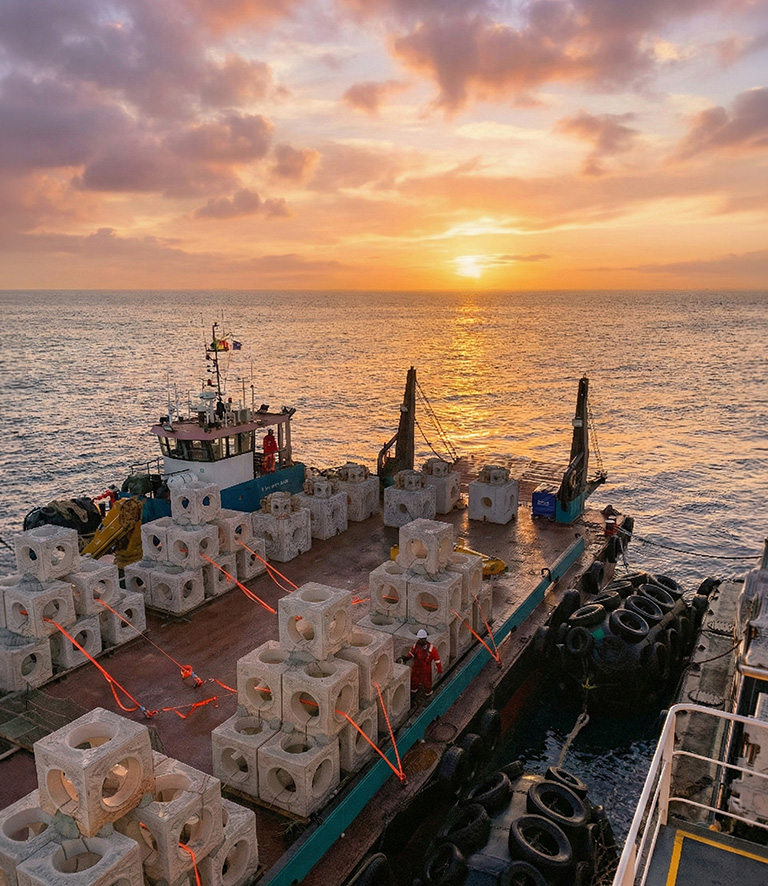
This project was not about placing isolated concrete elements on the seabed. Its objective was to design and deploy a coherent underwater habitat, engineered for long-term performance and structural integrity.
To achieve this goal, the location of each reef unit was carefully defined through a comprehensive site assessment combining geophysical surveys, geotechnical investigations, environmental analysis and marine science studies.
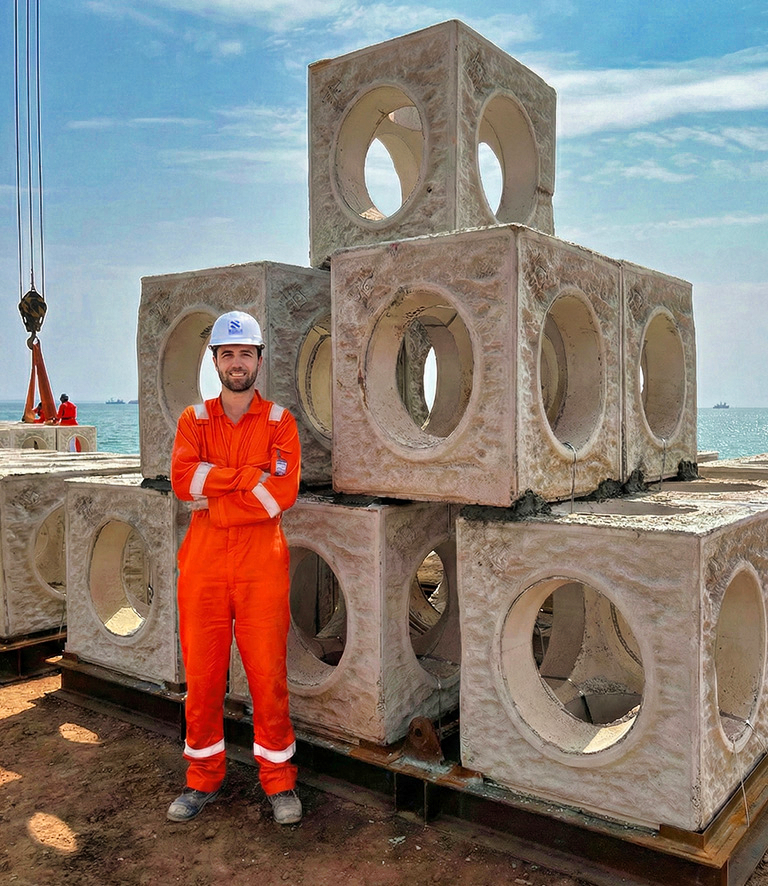
The project scope covered the fabrication and installation of more than 80 artificial reef modules, including both cubic and pyramidal structures. These elements were deployed across multiple underwater cluster zones to form structured reef areas, with a design life defined at 99 years minimum.
Key constraints included local fabrication of the structures, maximizing the use of local resources in terms of people, materials and equipment, the transportation of reef units from the yard to the port, complex assembly logistics, heavy lifting operations involving numerous handling sequences, and offshore installation requiring controlled positioning and repeatable execution.
Delivering this project required close coordination between engineering, operations and offshore execution teams, from the earliest design stages through to final immersion on the seabed.
Powered by STAPEM Offshore, TTSM, DSMT & Mareal
From Engineering
to Execution
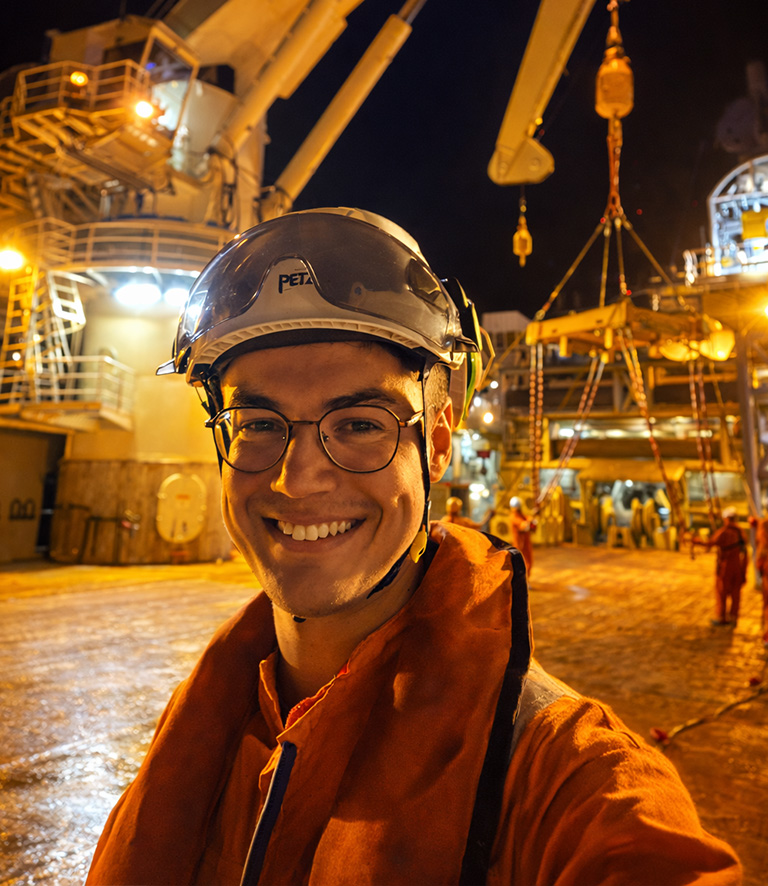
“While Guillaume was focused on the fabrication and assembly phases of the reefs, my role was centered on project management, vessel mobilization preparation and coordination with the different stakeholders. This project involved many players – the client, local authorities, subcontractors and several STAPEM Group entities. Keeping contractual, administrative and marine aspects aligned with the operational reality was essential to ensure smooth execution offshore.”
Powered by STAPEM Offshore
From Fabrication
to Installation
Local fabrication, inland transportation and assembly at Dakar Port required rigorous logistical planning. With the objective of delivering the reefs before the end of 2025, in line with our commitment to the client and a fixed project schedule, STAPEM teams successfully overcame day-to-day operational challenges on site.
Each offshore campaign relied on disciplined coordination between deck and lifting teams, marine vessel crews and supervisors to ensure the safe, efficient and compliant deployment of the reef modules across multiple installation zones.
Guillaume Engel, Project Engineer, adds:
“My role was to turn the plan into physical reality. I worked at the Kinabour base to initiate fabrication, then at the Port of Dakar to supervise the assembly of the reef structures.
I also managed the second offshore campaign onboard the Olympic Zeus. Handling heavy concrete elements offshore clearly highlights the importance of upstream engineering. Seeing the reefs installed on the seabed is the reward for months of preparation and coordination.”
Powered by TTSM & STAPEM Offshore
Survey & Seabed
Characterisation
Survey and seabed characterisation played a critical role in ensuring that offshore execution remained fully aligned with the final artificial reef design validated by all stakeholders. Detailed seabed mapping, characterisation of soil mechanical properties and environmental baseline studies provided a shared operational reference for all stakeholders during the engineering phase of the reefs and continued to support offshore teams throughout deployment.
Jean Maes, Managing Director, TTSM, notes:
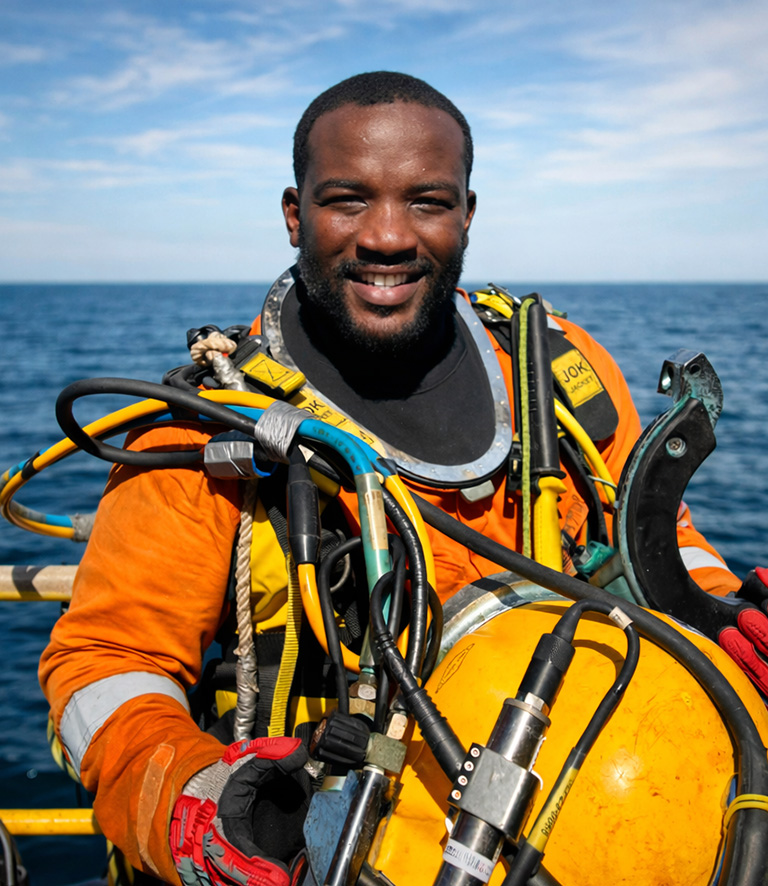
“On projects like this, survey data is the foundation of everything that follows. A clear understanding of seabed conditions, reef zoning and installation constraints allows offshore teams to operate with confidence and consistency.
Our role is to ensure that this information is properly translated into practical offshore procedures. When survey results, engineering intent and marine execution are fully aligned, operations become predictable, controlled and repeatable. That alignment is what ultimately secures both installation quality and environmental protection.”
Designed. Deployed. Sustained.
The Result
A coherent, traceable and durable artificial reef system was delivered to the client and local stakeholders. Conceived, engineered and executed as a fully integrated project, the newly established reef village contributes to the regeneration of marine ecosystems while supporting the long-term livelihoods of local fishing communities.
Safety
A high-standard QHSE process was implemented to ensure safe fabrication, lifting, handling and offshore deployment operations. STAPEM teams minimized operational risks across all campaign phases, achieving the project objective with zero incidents recorded.
Reliability
A reef architecture engineered for long-term performance, with a 99-year design life and consistent deployment logic across all underwater zones.
Local Impact
A project executed with and for local stakeholders, supporting marine productivity, artisanal fishing areas and long-term ecosystem regeneration off the coast of Saint-Louis.
This project illustrates the STAPEM Group signature: integrating engineering, marine operations and subsea expertise to deliver complex offshore projects with tangible environmental and social impact.
Featured on National TV
A meaningful moment for our teams and a strong sign of institutional support for an initiative benefiting marine productivity and local fishing communities.