

The X-shaped concrete floater. Scalable to 20MW+. Built for long-term performance.
Developed within the STAPEM Group engineering hub, led by Mareal, the XCF (X-shaped Concrete Floater) is a patented semi-submersible concrete solution designed to host the next generation of large-scale wind turbines.
By combining the durability of civil engineering with the precision of offshore engineering, the XCF delivers a low-carbon, industrially scalable technology, validated at TRL 6 and ready for floating wind deployment.
ENGINEERED FOR SCALE
Designed for next-generation floating wind.
Discover the XCF Technology
This modular and scalable concrete floater combines offshore engineering and civil construction expertise to deliver a robust, low-carbon solution for large-scale floating wind farms.
Built to maximize local industrial content, enhance safety and reduce environmental footprint, XCF demonstrates how advanced engineering can support the industrial scale-up of offshore wind energy.
Powered by Mareal (Structural Concept)
& d2m Engineering (Hydrodynamics & Stability)
Design and Performance
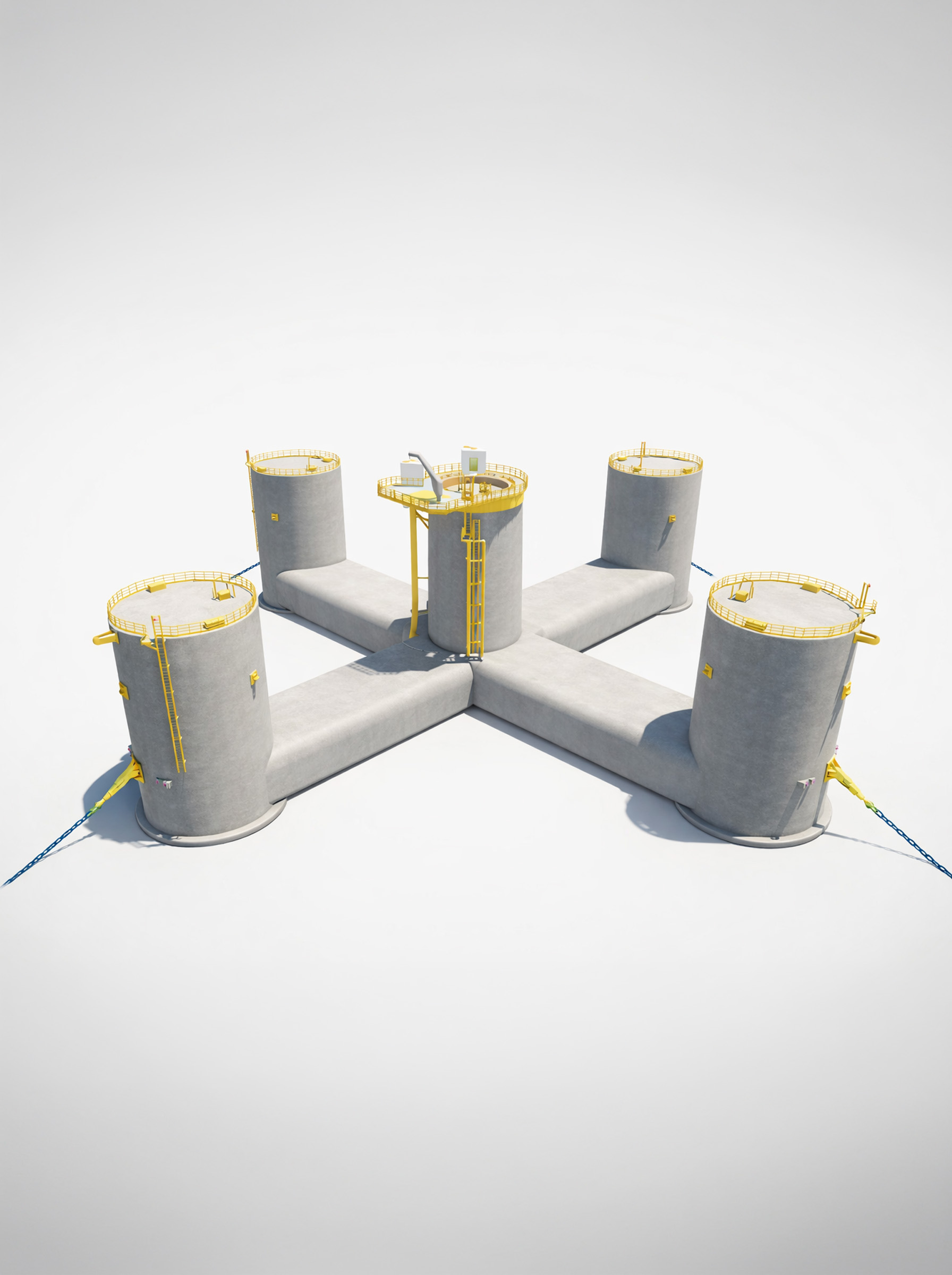
The XCF is built around a distinctive geometry combining four outer columns with a central mast support. This X-shaped configuration provides inherent, omnidirectional stability, ensuring consistent hydrodynamic performance regardless of wave direction or sea state.
By design, at least one column always operates at full efficiency to generate restoring forces. For next-generation turbines, scaling up is not simply a matter of size but of physics. The XCF adopts a stiff-stiff structural philosophy, ensuring that natural frequencies remain clear of both wave excitation and blade-passing frequencies, effectively mitigating resonance risks.
Despite its capacity to support turbines beyond 20MW, the XCF maintains a compact footprint, optimizing port access and simplifying offshore logistics.
Powered by Mareal
Materials & Durability
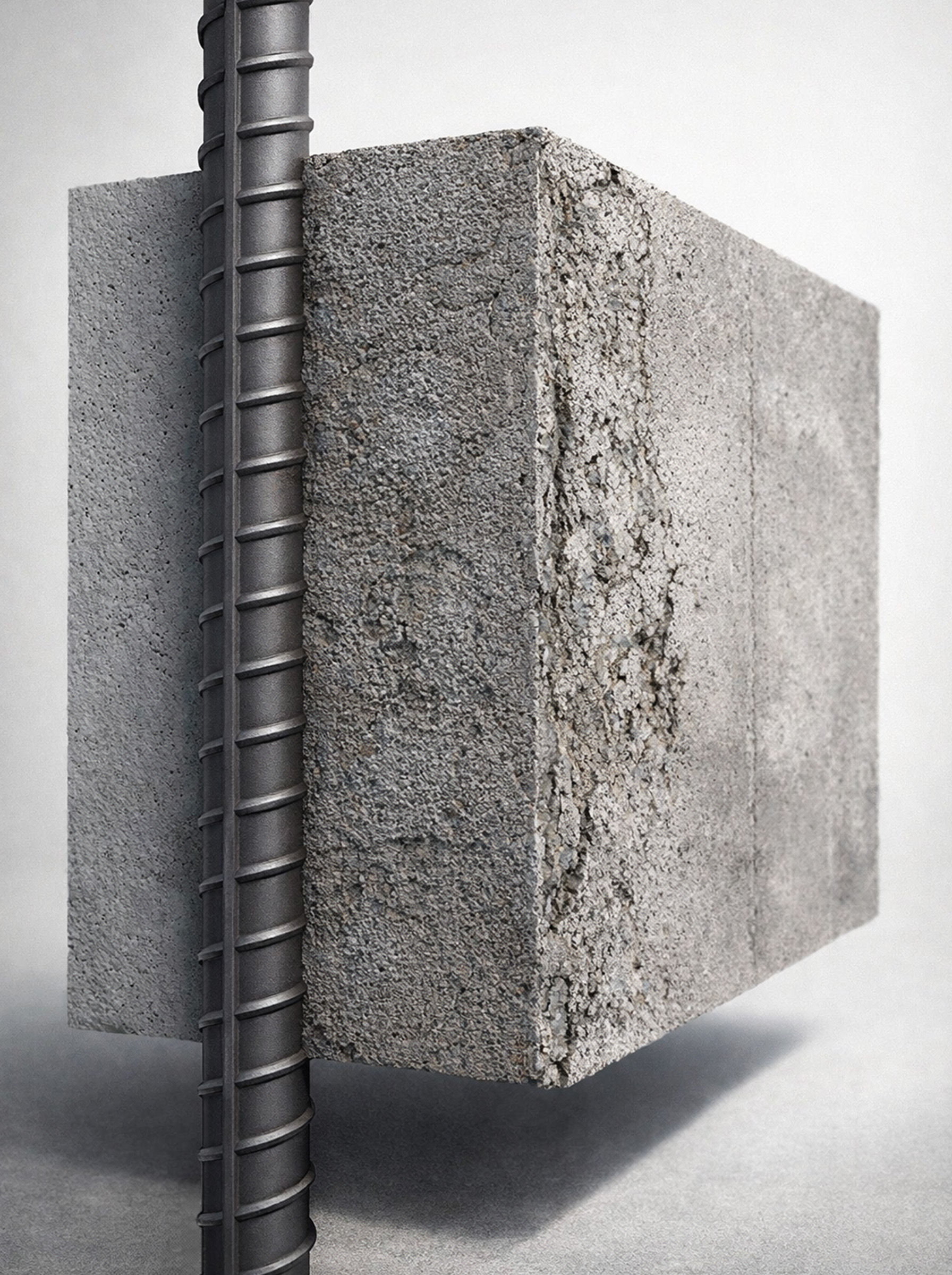
Concrete is a deliberate and strategic choice for floating wind foundations. Unlike steel floaters dependent on global supply chains, the XCF is designed to support local industrial content and long-term sustainability.
High-performance marine concrete offers exceptional durability in offshore environments, with a potential design life ranging from 50 to 100 years. Immune to fatigue mechanisms that typically affect steel structures, the XCF significantly reduces inspection, maintenance and lifetime operational costs.
Using standard civil engineering materials available worldwide, the XCF can be manufactured in local ports, lowering the carbon footprint of construction while strengthening regional industrial ecosystems.
Powered by Mareal
Industrial Execution
The XCF is engineered not only for offshore performance but also for efficient, repeatable construction. From the earliest design stages, constructability has been embedded into the engineering approach.
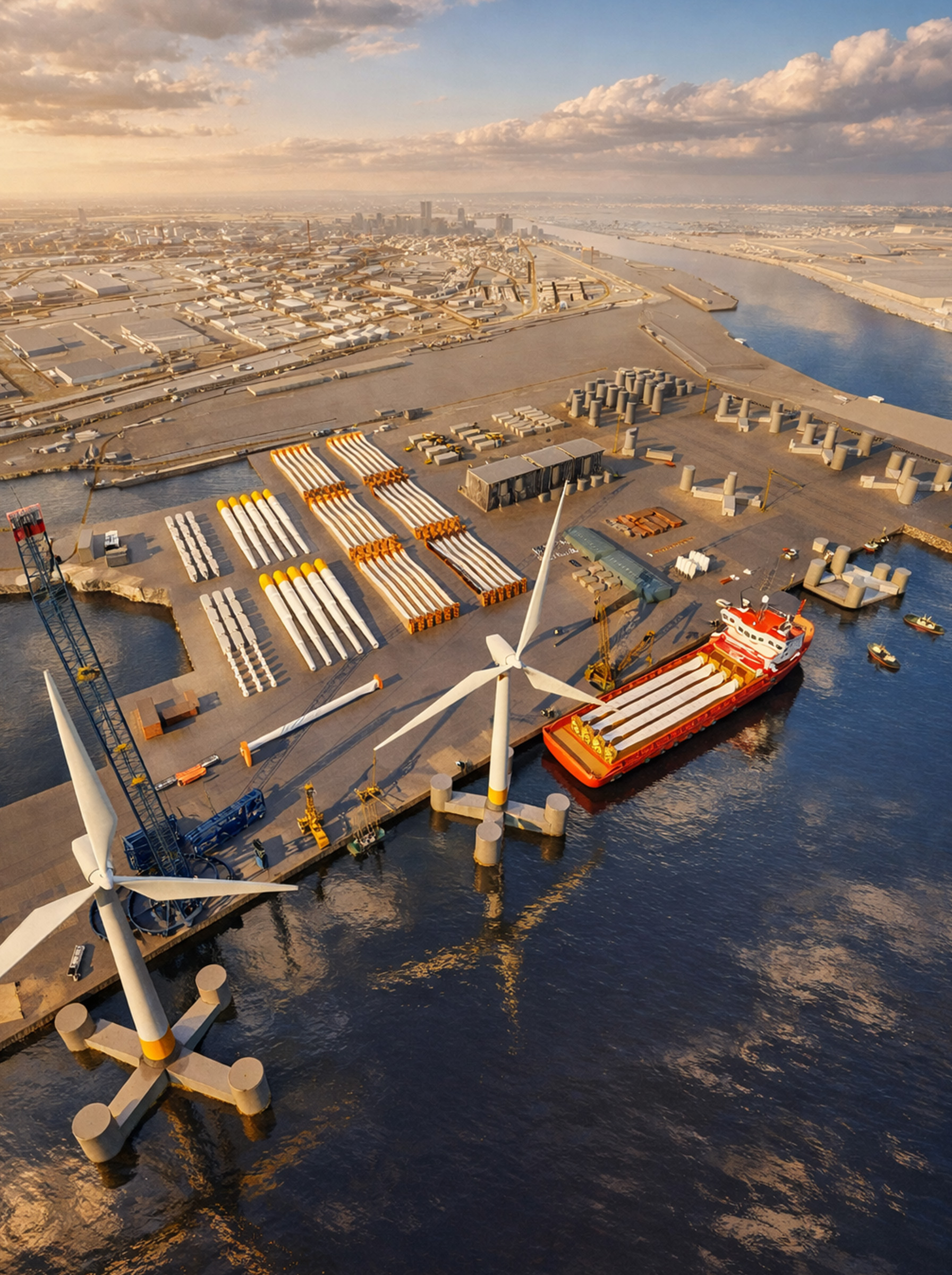
Pontoons, columns and transition elements are cast separately using standard slip-forming techniques, enabling parallel production lines and controlled quality. Final assembly is performed in dry dock or on barges, reducing construction complexity and execution risk.
With a limited yard footprint of approximately 5 to 7 hectares, the XCF can be produced in a wide range of existing ports, avoiding the need for heavy steel fabrication infrastructure and supporting rapid industrial scale-up.
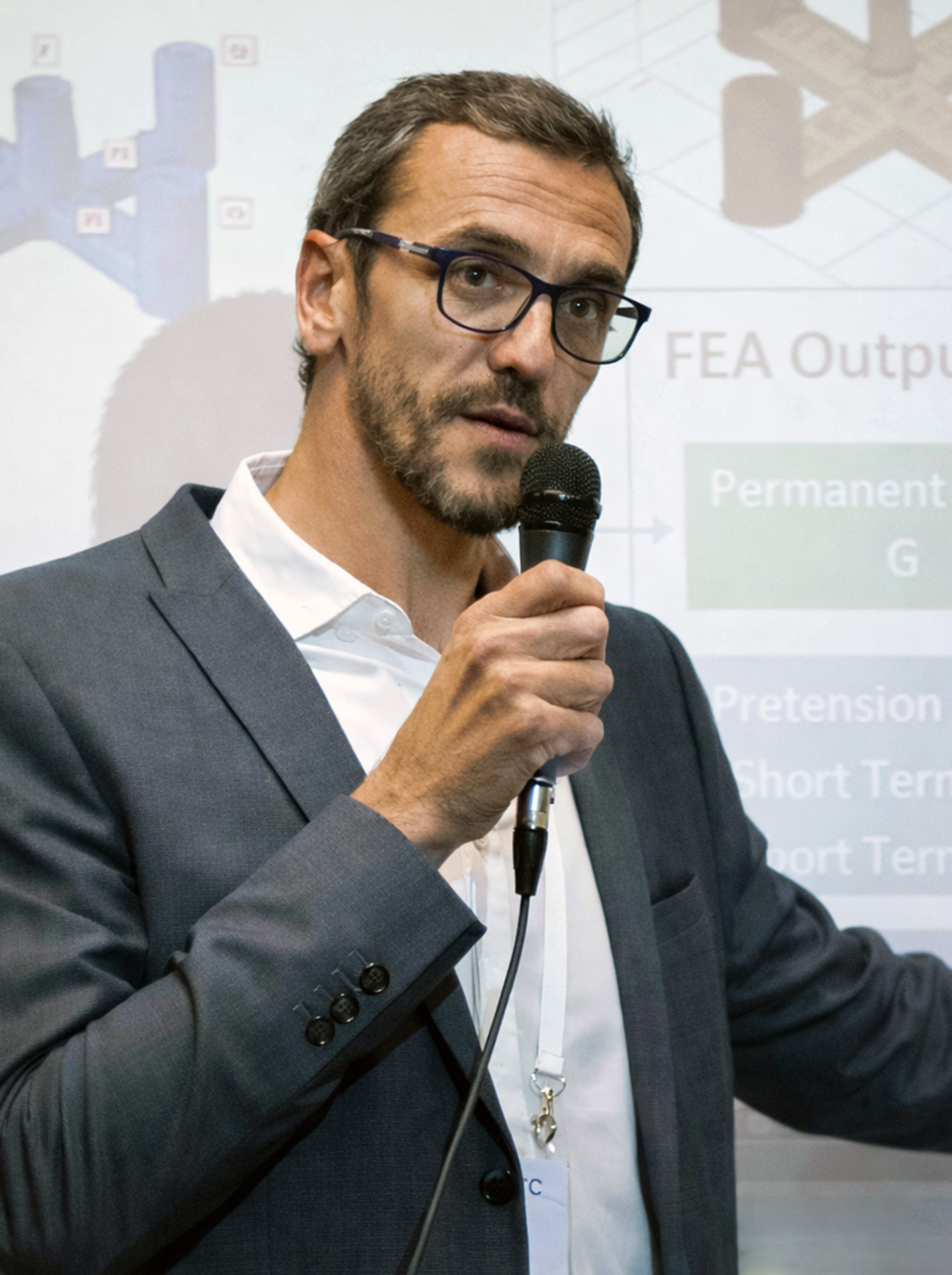
Luc Mouton, Offshore Wind Lead at Mareal, explains:
“From the beginning, the objective was to design a floating structure that could be built efficiently at scale, using realistic port environments and proven civil engineering techniques.
By separating the main structural elements and organizing production in parallel, we reduce construction risks and improve quality control. This industrial logic is essential to move floating wind from pilot projects to large-scale deployment.”
Powered by Mareal
Proven Maturity
The XCF is a mature floating wind solution, reaching Technology Readiness Level 6. Its behavior and performance have been validated through extensive wave basin testing campaigns on 10MW and 15MW configurations, including extreme sea-state conditions.
The design methodology has been independently reviewed and validated, with an Approval in Principle granted by Bureau Veritas in 2021 and a Design Basis review performed by DNV in 2022.
The selection of the XCF for the Groix & Belle-Île floating wind pilot project confirms strong confidence from developers and industry stakeholders in both the technology and its industrial readiness.
Jean-Marc Gerber, General Manager of the STAPEM Group, explains:
“Reaching TRL 6 is a major milestone, but it is not just a label. It reflects years of engineering work, testing, independent review and continuous alignment between design assumptions and real-world offshore conditions.
The XCF has been challenged, validated and reviewed by recognized certification bodies, and its selection for a pilot project confirms that this technology is not only credible on paper, but ready to move towards industrial deployment.”